As an Amazon Associate we earn from qualifying purchases. Links marked ↗ go to Amazon UK searches; buying through them costs you nothing extra. How this site is funded.
Home Emergency Kit is an independent guide. It is not affiliated with, or endorsed by, the UK government or the Be Ready campaign.
Run by IIB Trading Ltd · hello@homeemergencykit.co.uk
Why keep a grab bag?
Most emergencies are dealt with at home, but sometimes the safest thing is to leave. Be Ready suggests you “could consider keeping some essential items you might need to take with you if asked to leave your home quickly in a spare bag”, and notes that some people call this a ‘grab bag’. Its flooding page goes further and suggests packing one in advance if you live in an area at risk of flooding.
If the authorities ask you to evacuate, don't delay. Be Ready's hazards guidance warns that delaying or refusing to evacuate may put your life at risk, and can put emergency responders in danger too. Having the bag packed is what makes leaving quickly possible.
What to pack in a grab bag
This list combines the Be Ready flooding advice with the extra items Ready Scotland suggests keeping in a waterproof bag. The last column shows where each one comes from.
| Item | Notes | Source |
|---|---|---|
| Medication you need | Regular medicines and a written list of doses | Be Ready (flooding) |
| First aid kit | A compact kit for minor injuries | Be Ready (flooding) |
| Important documents | Copies of ID and insurance details, sealed in a watertight bag | Be Ready (flooding) |
| Torch | Small LED torch or head torch with fresh batteries | Be Ready (flooding) |
| Bottled water | A bottle or two to drink on the way | Be Ready (flooding) |
| Warm, waterproof clothing | A waterproof jacket and a warm layer | Be Ready (flooding) |
| Baby care items | Ready-to-feed formula, nappies and wipes | Be Ready (flooding) |
| Phone charger and power bank | With the right cables | Ready Scotland |
| Spare keys, glasses, hearing aid batteries | The small things that are hard to replace quickly | Ready Scotland |
| Whistle, pencil and paper | For attracting attention and leaving notes | Ready Scotland |
| Emergency contact numbers | On paper, as well as in your phone | Ready Scotland |
| Cash | Some coins and notes | Be Ready checklist (home kit) |
Keep a copy of your household emergency plan in the bag too, with your agreed meeting place written on it.
Grab bag or home emergency kit?
You need both, and they do different jobs. The home emergency kit is for staying put for 3 days: crates of water, tins, blankets and a radio. The grab bag is a small, light subset for leaving within minutes. Don't try to fit 3 days of water into it. At 3 litres per person per day, that's 9 litres for one person, which weighs about 9 kg, far too heavy to carry far. A bottle or two is enough to drink on the way.
3 days of water and food, warmth, light, radio, power bank, first aid, documents.
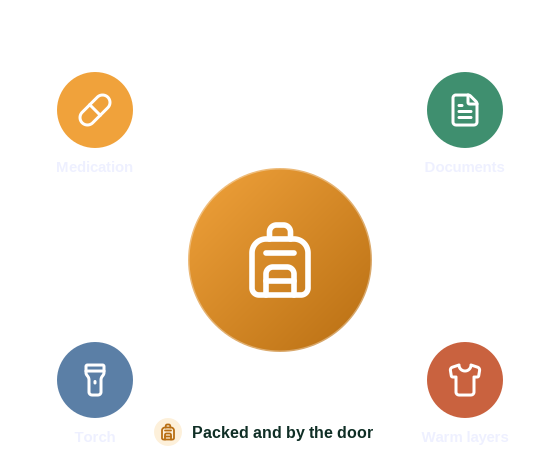
Medication, documents, torch, a little water, warm waterproof clothes, chargers, keys.
Choosing the bag
Any sturdy bag you can carry for a while will do. If you're buying one, these are the things to look for:
- A backpack, so your hands stay free for children, pets or a torch.
- Water resistance, or a dry bag inside it, since Ready Scotland suggests keeping the kit in a waterproof bag.
- A size you can actually lift when it's full. Around 20 to 30 litres suits most adults; a small one for each child keeps their own things together.
- Reflective strips or a bright colour, which help if you're leaving in the dark.
- A clear, zipped pouch for documents and the medication list, so they stay dry and easy to find.
| Item | What to look for | Search Amazon UK |
|---|---|---|
| Backpack | Water-resistant, 20 to 30 litres, padded straps, reflective details | Waterproof backpacks |
| Dry bag | Roll-top, sized to fit inside your backpack | Dry bags |
| Document pouch | Waterproof and zipped, A4 or A5 | Document pouches |
| Torch | Small LED or head torch on common batteries | Small LED torches |
| Whistle | Loud, pealess safety whistle | Safety whistles |
Our calculator works out water and food totals for everyone at home, including babies and pets.
If you're asked to leave
From the Be Ready flooding guidance, if there's time and it's safe:
- Turn off your gas, electricity and water, but never touch an electrical switch while standing in water.
- Move your family, pets and important items to safety.
- Take your grab bag and follow the advice of the emergency services or your council.
- Never walk or drive through flood water. Be Ready says driving through flood water is the number one cause of death during flooding.
It helps to know now where your stop tap, gas shut-off valve and main electricity switch are, so you can find them quickly.
Children, pets and people who need extra help
Pack for everyone who's leaving. For babies, that means ready-to-feed formula, nappies and wipes. For pets, a lead or carrier, food and water. Ready Scotland also suggests documents or supplies for assistance animals, and spare mobility aids. If someone in your home can't leave without help, plan it in advance and read Be Ready's advice for disabled people and carers. Children can help pack their own small bag, which also helps them remember the plan.
Where to keep it, and when to check it
Be Ready suggests storing the bag somewhere you can easily get to, such as near the front door or in a hall cupboard. Check it when you check your main kit every six months: swap out medicines and water before their dates, recharge the power bank, and update the documents and numbers.
Questions people ask
What is a grab bag?
A bag of essential items kept packed so you can take it with you if you're asked to leave home quickly. Be Ready mentions it as a 'grab bag' in its advice.
What should be in a grab bag in the UK?
Be Ready's flooding advice suggests medication, a first aid kit, important documents, a torch, bottled water, warm waterproof clothing and baby care items. Ready Scotland adds phone chargers, spare keys and glasses, a whistle and emergency numbers.
What's the difference between a grab bag and an emergency kit?
An emergency kit holds 3 days of supplies for staying at home. A grab bag is a small, light selection of essentials for leaving quickly.
How big should a grab bag be?
Big enough for the essentials and light enough to carry comfortably. As a guide, a 20 to 30 litre backpack suits most adults.
Should each person have their own grab bag?
It helps. A small bag for each person, including children, spreads the weight and keeps everyone's own items together.
Where should I keep my grab bag?
Somewhere you can easily get to on the way out, such as near the front door or in a hall cupboard.
Should I pack food in a grab bag?
A few snacks that don't need cooking are useful, but keep the bag light. Your main food store belongs in the home kit.
Related guides
Sources
- Be Ready: Be ready for emergencies (UK government campaign)
- Be Ready: Flooding
- Be Ready: Be informed about hazards
- Ready Scotland: Make an emergency kit
- Be Ready household emergency plan (PDF)
- Be Ready: Advice for disabled persons and carers
Official pages last checked on 23 November 2026. If anything here differs from the official advice, follow the official advice, and please tell us so we can fix it.